
How Michigan Homeowners Hire Full-Service Roofing Contractors in Michigan Without Getting Burned
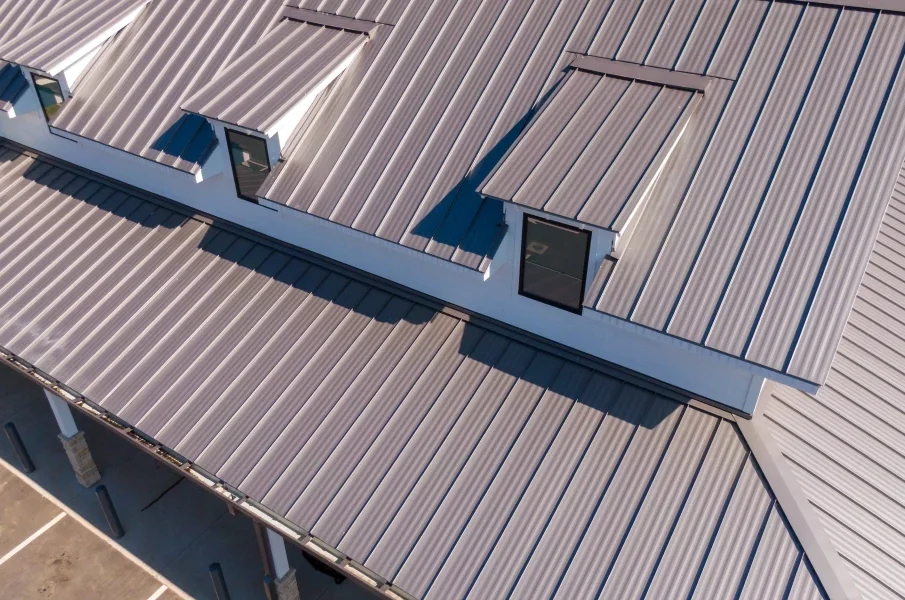
A neighbor of mine paid $19,400 for a tear-off in 2021. By the spring of 2024 she was standing in her kitchen with a bucket, because the crew that took her deposit had never once looked at her attic intake vents. The shingles were fine. The roof was not. That gap, between what a crew installs and what a roof actually needs, is where most Michigan roofing money disappears.
You can avoid her outcome. Not by finding the cheapest bid, and not by hiring whoever knocks first after a hail storm. You avoid it by knowing what a complete roofing system includes, asking four specific questions before you sign anything, and walking away from anyone who flinches at the second one. That is the whole article. Here is how you run it.
Why a Michigan Roof Lives a Harder Life Than Most
Roofing in this state is not a mild assignment. The freeze-thaw cycle does the damage. Water seeps into a tiny gap during a January thaw, refreezes overnight, expands, and pries the gap wider. Repeat that a few hundred times across a decade and you have a leak that shows up nowhere near the obvious stain on your ceiling.
Snow load matters too, and so does the ice that backs up under your eave when the attic above it is warm. According to the National Weather Service, large parts of the Great Lakes region routinely see both deep winter snowpack and repeated freeze-thaw swings in the same season. That combination is the reason attic ventilation matters more here than in, say, Arizona.
Here is my stance, and I will defend it: if a contractor quotes you a Michigan roof without climbing into your attic, you are not hiring a roofer. You are hiring a shingle installer with a truck. They are different jobs and they cost about the same, which is exactly the problem.
What “Full-Service” Actually Means When You Read a Bid
The phrase gets used loosely. Stripped down, it means one company handles the whole system instead of subcontracting pieces to whoever is free that week. On a real bid, that should show up as line items, not a lump sum.
Look for these on your quote. If any are missing, ask why in writing.
- Tear-off and disposal of the old material, with the dumpster fee named
- Underlayment, and which type (synthetic versus felt is not a trivial difference)
- Ice and water shield at the eaves and in valleys, with footage listed
- Intake vents at the soffit or eave, because exhaust without intake pulls nothing
- Ridge, box, or turbine exhaust vents sized to your attic’s square footage
- Flashing around chimneys, skylights, and wall intersections
- Drip edge, and the debris cleanup at the end
That list is where a cheap bid hides its savings. Take out the intake vents and the ice shield and you have knocked real money off the total while the customer sees the same shingle brand on both quotes. Which is why brand loyalty at the shingle level tells you almost nothing.
Should You Repair or Replace? A Decision You Can Make Today
Most homeowners jump straight to replacement because it feels decisive. Often that is throwing money at the wrong problem. Use this test instead.
Repair it when the damage sits in one area, the roof is under roughly fifteen years old, and you can see intact material around the problem. A single failed pipe boot or a cracked flashing collar is a two-hour fix, not a five-figure project.
Replace it when you find granule loss across multiple slopes, when shingles curl or cup at the edges, when you have patched the same spot twice in three years, or when the decking underneath flexes underfoot. Age alone is a weak signal. Pattern and spread are stronger ones.
Call someone this week if water has reached interior drywall, if you can see daylight through the roof boards, or if a storm took shingles off an entire slope. Roof damage does not plateau. It compounds, and the interior repairs cost more than the roof did.
One practical note from watching crews work: ventilation problems masquerade as roofing failures constantly. If your upstairs rooms run hot in July and your shingles are failing early across the whole field rather than at the edges, suspect airflow before you suspect the shingles.
Four Questions That Separate Contractors From Salespeople
Ask these before anyone climbs a ladder. The answers do more work than any reference list.
One: Who is actually on my roof? The company you sign with should employ the crew, not broker the job to a subcontractor you never met. Employees carry the company’s training and its liability insurance.
Two: What is your intake ventilation plan for my attic? The pause after this question is diagnostic. A roofer who knows the trade will start talking about soffit area and net free vent space. A salesperson will say “we use ridge vents” and change the subject.
Three: Are you licensed and insured, and can I see it? Ask for the certificate, not a verbal yes. Verification takes them thirty seconds if the answer is honest.
Four: What does your workmanship warranty cover, and who honors it if you sell the business? Manufacturer warranties cover the shingles. They do not cover the labor that put them there badly.
According to the National Association of Home Builders, the residential construction trades skew heavily toward small firms and owner-operated businesses. That is mostly good news, and it is also why you should judge the specific crew and the specific owner rather than a glossy brand name.
Reading the Estimate Without Getting Played
Three bids, same scope, wildly different totals. That is normal and it usually is not fraud. It is scope.
Put the quotes side by side on one sheet of paper and mark which include tear-off, which include ice shield, which name a shingle product line instead of a vague category, and which list a cleanup. I would take the middle bid from the crew that itemized everything over the low bid from the crew that quoted one number.
Also watch for the deductibles game. If someone offers to cover your insurance deductible, that is a warning sign, not a discount. In most states that arrangement is illegal, and it tends to come attached to crews that vanish before the punch list.
One more filter. According to the National Roofing Contractors Association, proper installation practice is what separates a roof that reaches the end of its rated life from one that fails years early. The materials are rarely the variable. The hands are.
If you are comparing local options and want to see what a mature, locally rooted operation looks like on paper, Full-Service Roofing Contractors in Michigan that have stayed in business for decades tend to advertise the boring stuff: ventilation, flashing, cleanup, warranties. That is a useful benchmark whether you hire them or not.
The Afternoon Checklist
Do this in order and you will not get burned.
- Photograph the damage from the ground and inside the attic before anyone visits.
- Get three written, itemized estimates on the same scope.
- Ask the four questions above, and write down the answers verbatim.
- Verify licensing and insurance by certificate, not by conversation.
- Check the warranty language for the word “labor.”
- Never pay more than a modest deposit up front. Materials money is reasonable. Half the job before the dumpster arrives is not.
- Hold a final payment until your own inspection passes and your yard is clean.
Notice what is not on that list: the brand of shingle, the color of the truck, and the speed of the callback. Those are the things that get sold hardest and matter least.
Start With the Attic, Not the Shingles
Everything above comes back to one idea. A roof is a system with intake, exhaust, water shedding, and flashing, and the shingles are only the visible top layer of it. Hire someone who talks about the whole system and you will pay roughly the same as you would have paid the other guy. You will just do it once instead of twice.
So before you call anyone, go stand in your attic with a flashlight for five minutes. Look for daylight, look for stained decking, look at where the air is supposed to move. Then call three contractors and ask how they plan to fix what you just saw. The one who answers the question you actually asked is your roofer.