Why Vera Pizza Napoletana Is the World’s Most Regulated Food
Most foods don’t have a governing body. Neapolitan pizza does. It has international certification standards, a 40-year-old trade association that conducts on-site inspections, and a UNESCO intangible heritage designation that puts it in the same cultural category as Mongolian throat singing and the Mediterranean diet. That’s not marketing. That’s the actual regulatory infrastructure built around a disc of dough, tomato, and cheese.
If you’ve ever bitten into a genuinely certified Neapolitan pie and wondered why it tasted so different from everything labeled “pizza” in the frozen food aisle, this is the explanation. And once you understand what goes into making Vera Pizza Napoletana the real thing, you’ll never look at the imitations the same way again.
A Street Food That Became a Cultural Monument
Modern pizza as we know it evolved in Naples’s poorer areas back in the late 18th century to the early 19th century, when adding tomato to flatbread became a local sensation. That humble street food origin is part of what makes the eventual story so remarkable. The Neapolitan version we know today emerged in the 18th century, when pizza was considered cheap street food usually consumed by the lower classes.
The ingredient that changed everything was the tomato, brought to Europe from the Americas, and initially feared as poisonous by most of the continent. Neapolitan peasants, with little to lose, disagreed. They started slathering it on their flatbreads, and history pivoted.
Pizza Napoletana dates back to the early 1700s, and the recipe of the iconic Margherita pizza traces to the early 1800s. The name was established in 1889 when the Queen of Italy, Margherita of Savoy, visited Naples and was presented with a pizza made with ingredients featuring the colors of the Italian flag: red tomatoes, white cheese, and green basil. That royal endorsement was the original Yelp five-star review, and the city never looked back.
The art of Neapolitan pizzaiuolo was inscribed in 2017 on UNESCO’s Representative List of the Intangible Cultural Heritage of Humanity. The element originates in Naples, the capital of the Campania Region, where about 3,000 pizzaiuoli now live and perform – and according to UNESCO’s official intangible heritage registry, the practice encompasses four distinct phases of dough preparation and wood-fired baking. That’s not a food style. That’s a civilization-level skill set.
The Certification Machine Behind Every True Pie
Here’s where Neapolitan pizza gets genuinely unusual among foods. The Associazione Verace Pizza Napoletana was founded in 1984 with the aim of protecting and promoting the tradition of Neapolitan pizza. The association performs rigorous periodic checks on all of its members to ensure those using the brand name are following the traditional methods described in detail in the regulations.
The AVPN’s certification standards, published in their official international regulations at pizzanapoletana.org, specify not just ingredients but the precise chemistry of the dough. Flour, water, salt, and yeast are mixed together, with strict care taken that direct contact between salt and yeast does not occur for more than 5 minutes, otherwise the salt will damage the yeast cells. That’s not a recipe. That’s a protocol.
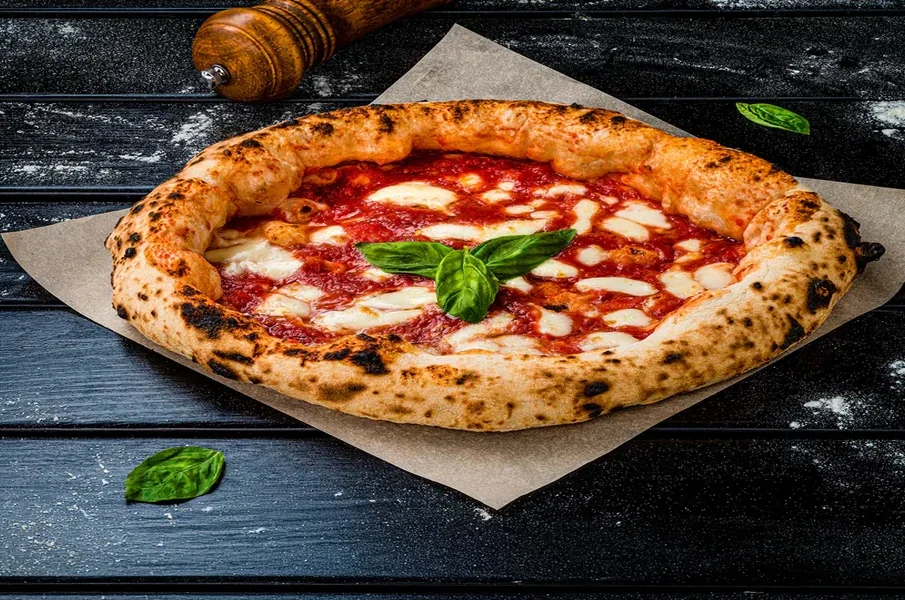
Certified Neapolitan pizzas cook in wood-fired ovens at temperatures around 485°C (905°F) for just 60 to 90 seconds. That extreme heat is what produces the char spots on the crust that pizza nerds call “leoparding.” It’s not a flaw. It’s proof the oven is doing what it’s supposed to do.
In 2010, thanks to the efforts of the AVPN, Neapolitan pizza was recognized as a Traditional Speciality Guaranteed by the European Union. So before it even got the UNESCO nod seven years later, the EU had already locked in its protected status. Two of the world’s most significant regulatory bodies decided this pizza warranted official protection. That tells you something.
“The Pizzaiuoli are a living link for the communities concerned… the practice fosters social gatherings and intergenerational exchange.” – UNESCO Intangible Cultural Heritage Committee, 2017
The Three Circles of Authenticity: A Framework for Evaluating Any Neapolitan Pie
Not every restaurant claiming “Neapolitan” is actually playing by those rules. Here’s a practical way to evaluate any pie you’re considering, using what I call the Three Circles of Authenticity.
Circle One: The Cornicione. That’s the crust rim. On a genuine Neapolitan, it puffs high and airy, blistered with char in spots, light enough that you could eat three slices without feeling weighted down. If the crust is uniformly browned, uniform in texture all the way around, and crunchy throughout, something went wrong – probably a conveyor oven running at the wrong temperature.
Circle Two: The Center. A properly made Vera Pizza Napoletana has a wet, soft center. Not soggy, but yielding. San Marzano tomatoes, which grow on the volcanic soil near Mount Vesuvius, are the preferred tomatoes for making traditional Neapolitan pizza – and their low seed count and high pulp density mean your sauce should be intensely bright, not watery. If the center is dry and stiff, the tomatoes weren’t right or the pie sat too long.
Circle Three: The Provenance. Does the restaurant source approved ingredients? Do they use a wood-fired or properly certified oven? Is there a pizzaiolo with real training behind the counter, not just someone following a recipe card? Certification from the AVPN is the clearest signal, but even uncertified spots can land in Circle Three if the fundamentals are there. Eat with your eyes first, then your palate.
Why the Dallas Scene Makes This Matter Right Now
Dallas is not a city known for sitting still when it comes to food. The Dallas-Fort Worth metro now supports 16,000 restaurants, up from about 14,000 before the pandemic , according to a 2026 industry report by Restroworks. That growth has raised the stakes for any restaurant serious about standing out – especially in a niche as technically demanding as genuine Neapolitan pizza.
The demand is real. Diners who’ve tried the genuine article on a trip to Naples, or even in a certified New York shop, come home wanting the same experience. Finding an authentic Italian restaurant in Dallas that actually holds itself to AVPN-level standards, rather than just calling its pizza “Neapolitan” because the crust is round and thin, is the difference between honoring a 300-year-old craft and just borrowing its marketing.
The gap in quality between a pie built on real Neapolitan principles and a generic “gourmet pizza” is not subtle. It’s tasted in the first bite of the cornicione, in the brightness of the San Marzano sauce, and in the way the whole thing collapses slightly when you fold it – which is, by the way, exactly how Neapolitans eat it.
What Keeps the Tradition Alive
The short answer is people. Every year, the Association of Neapolitan Pizzaiuoli organizes courses focused on the history, instruments, and techniques of the art. Technical know-how is also guaranteed in Naples by specific academies, and apprentices can learn the art in their family homes.
That transmission model matters. Neapolitan pizza technique is not something you can learn from a YouTube channel and a home oven. It’s body knowledge, built over years of feeling dough hydration with your hands and reading fire with your eyes. The best pizzaioli can tell by the sound of the oven whether the temperature is right. That’s a skill that lives in the practitioner, not in a recipe file.
In recent years, there’s been a revival of traditional Neapolitan pizza across the globe. Many chefs and food lovers have embraced authentic methods, often seeking certification from the AVPN, an organization that upholds strict guidelines for what constitutes true Neapolitan pizza. That revival is why you can now find serious Neapolitan operators in cities far outside Italy – places where a committed pizzaiolo brings the whole craft with them, wood-fired oven and all.
The next time someone hands you a slice and calls it Neapolitan, run it through the Three Circles. The crust tells you the temperature. The center tells you the tomato. The provenance tells you the person. All three have to hold up, or you’re eating something inspired by Naples rather than something made from it.
| Standard | Requirement | Why It Matters |
|---|---|---|
| Oven Temperature | ~485°C (905°F) | Produces the leopard char and airy cornicione in 60-90 seconds |
| Tomatoes | San Marzano (Vesuvian volcanic soil) | Low seeds, dense pulp, bright acid – no watery sauce |
| Dough | Flour, water, salt, yeast; no oil in dough | Slow fermentation creates light, digestible texture |
| Certification Body | AVPN (founded 1984) | On-site inspections enforce standards globally |
| UNESCO Status | Intangible Cultural Heritage (2017) | Recognizes the craft as a living, generational tradition |